Reading Dog Body Language: Posture
While dogs cannot speak to us in the same words we use, they are still communicating with us in a way that we can understand with a little bit of practice. It is important to be able to interpret what they are saying correctly to mitigate stress and reduce the chances of bites or broken trust between you and your dog. I have often seen that people think they know what a tail wag means, but it can in fact be a lot more nuanced than just a tail wag. In this series, I will describe exactly what to look for in dog body language to understand what they are silently trying to communicate to us.
The first thing I want to explain are two terms: distance increasing and distance decreasing signals. Distance increasing signals are behaviors that dogs do to show that they want to us increase the distance between them and the other person or animal—in other words: “back off!” Distance decreasing signals are behaviors that dog do to show that it is okay to decrease the distance between them and the other person or animal. In other words: “I’m okay with you coming a little closer.” I will explain what each of these different signals look like in each major area of the dog’s body. Here we will focus on posture.

Distance Increasing Signals (left) are how your dog tells you to back up. Distance Decreasing Signals (right) are how your dog tells you that you are welcome to come a little closer.
When looking at posture, think about the fight, flight, freeze, and fool around response. A dog who is nervous but more defensive, will show the latter three. For example, a dog’s flight response will look like them orienting away from something. They may lean away, lift a paw, get behind something, or crouch lower to the ground. Their goal is to appear smaller, less threatening, or even get away from whatever is frightening them. If I were to see this response, I would try to make them feel more comfortable by giving them space from whatever is frightening them.
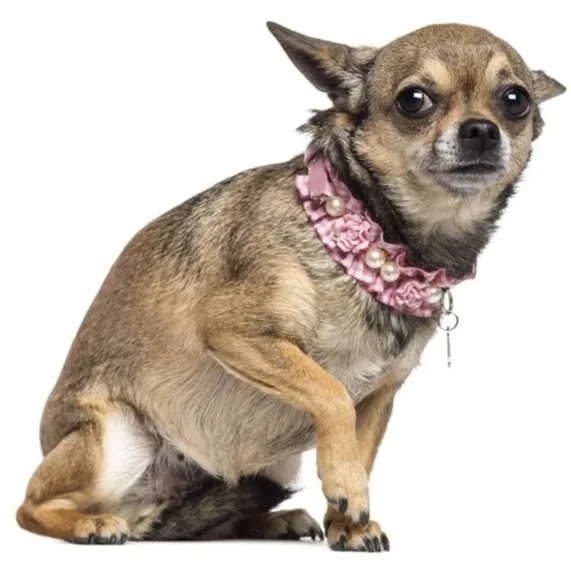
This dog is leaning away, crouched and lifting a paw, suggesting it is nervous and needs some space in order to feel more comfortable.
A dog who is using the freeze response will have tense body language. They will appear very stiff with tensed muscles. They will be resistant to moving. You may see other distance increasing signals throughout their body such as whale eye, hard eye, and a tensed mouth. I would back off immediately because this could very well escalate into a fight response at this stage.
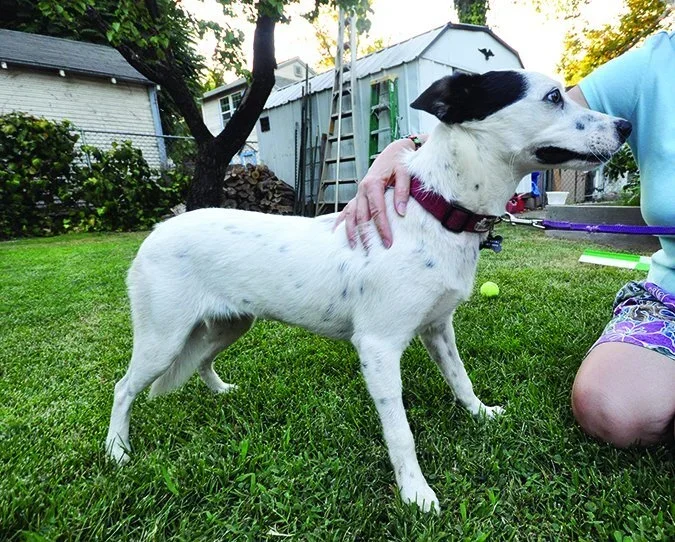
This dog is extremely tense and appears resistant to moving, indicating he is fearful. Other signals you will notice are the tucked tail, whale eye, pinned ears, and long lips. This dog needs space in order to prevent escalation.
A dog who is a little more unsure will fool around. Think about when you’re feeling a little anxious. You’ll fidget with things, bounce your leg, chew on your nails, etc. Dogs do the same thing. While yawning, licking their lips, or scratching themselves is normal behavior, you’ll see it in excess or in out-of-place situations when they are nervous. If you see them do any of these behaviors while also displaying other distance increasing signals, I’d give them space so they can feel a little more comfortable. I often see dogs yawn or lick their lips when people go in to give them hugs. While you may love giving your dog a hug, they may not be so sure about it. Many of them tolerate it, but I’d pay attention to how they react to it in terms of these signs we’ve been talking about in this series.
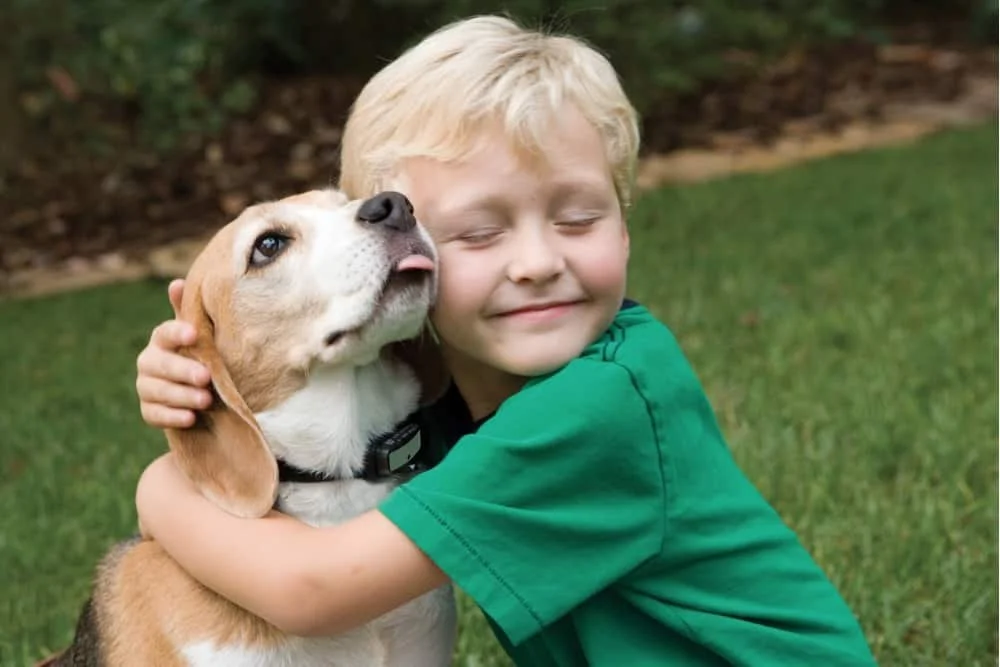
What appears to be a sweet moment between a little boy and his dog is actually not what it seems. The dog is leaning away from the boy, is flicking its tongue, ears are back, and the whites of the eyes are visible (whale eye). This dog is unsure about being restrained in a hug and this could lead to escalation if the child continues to ignore the dog’s distance increasing signals.
Finally, the last response you want to see is the fight response. A dog who has learned that their other options don’t work may be more forceful about getting someone or something that is frightening them to back off. They may also use the fight response when they feel there aren’t as many risks. Think about dogs who bark and snarl through the fence, but don’t do it once the fence is removed (barrier aggression). You’ll notice that they will be more forward leaning if they are confident, but they can still be leaning back if they are still unsure, their hackles may be raised if arousal is high, and they will be stiff and tense. Their body is ready to fight back at whatever continues to approach them. I would immediately back off at this point to reduce the risk of injury. It’s important that, if you see your dog doing this toward someone else, you don’t use yourself as a barrier between them. While your dog may love and trust you, they can easily redirect their aggression onto you. Use other objects as barriers and remove your dog from the situation.
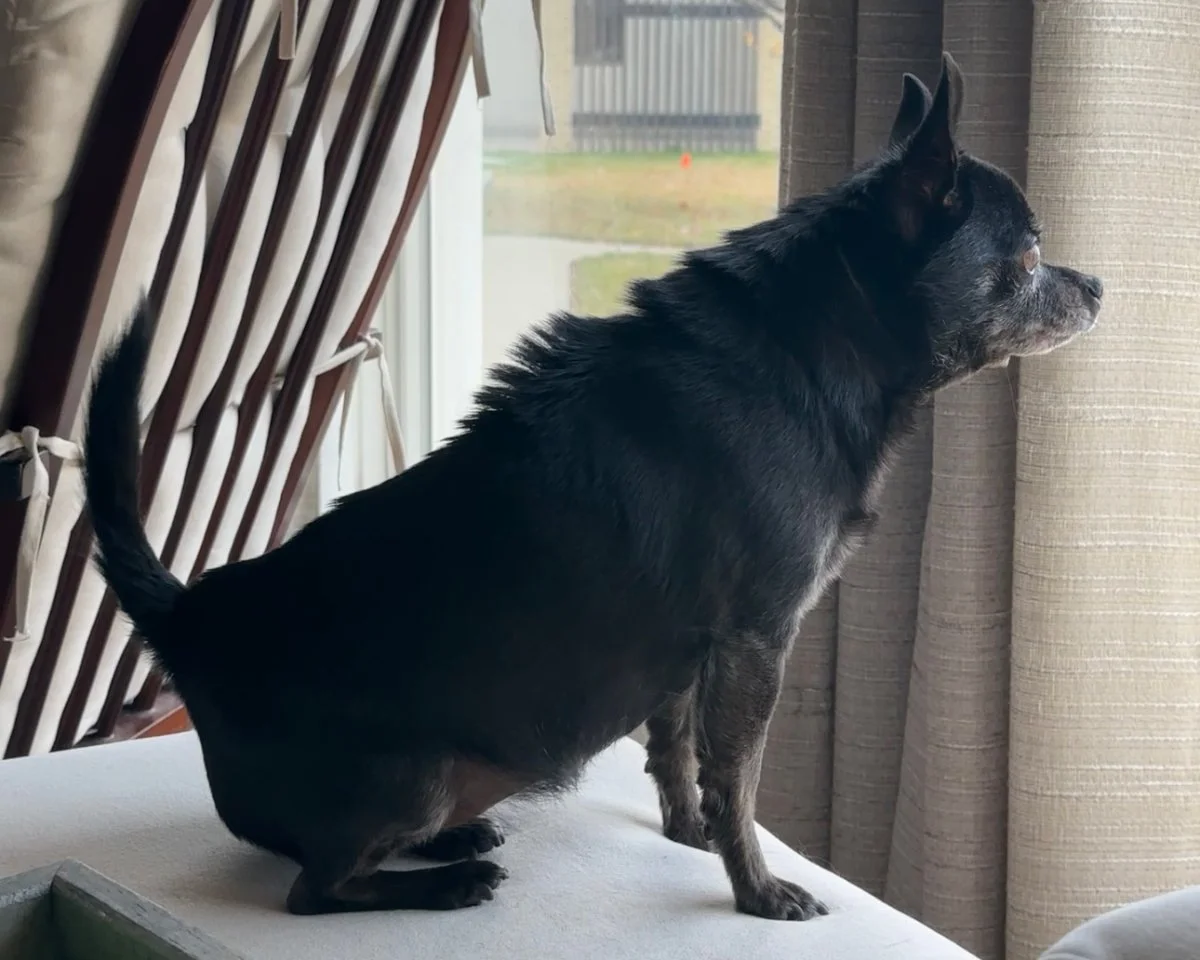
This chihuahua is forward-leaning, hackles raised, tail is held straight up, eyes are hard, and mouth is tense. With the window acting as a barrier, this little dog has the confidence to be aggressive toward passersby. If you were to see this without a barrier in the way, I’d remove the dog from the situation immediately or use objects between the dog and whatever it is aggressing. Do not block your dog with your body parts because, even if they love you so much, your dog can redirect their aggression onto you when they are stressed enough.
Now, dogs don’t just use their bodies to tell you to back off, they can also tell you it’s okay to come closer. A dog with posture that is oriented toward you isn’t always the fight response. Look for a loose body, gentle tail wagging, and soft eyes. A playful dog may even play bow at you. This is when the front end of their body splays to the ground while their back end remains high. Their tail will be high and wagging loosely. This is them inviting you to play with them. A dog who wants to show you that they are friendly may roll onto their back and expose their belly. They will sometimes do this when nervous, too, so context is key when determining whether it is okay to approach.
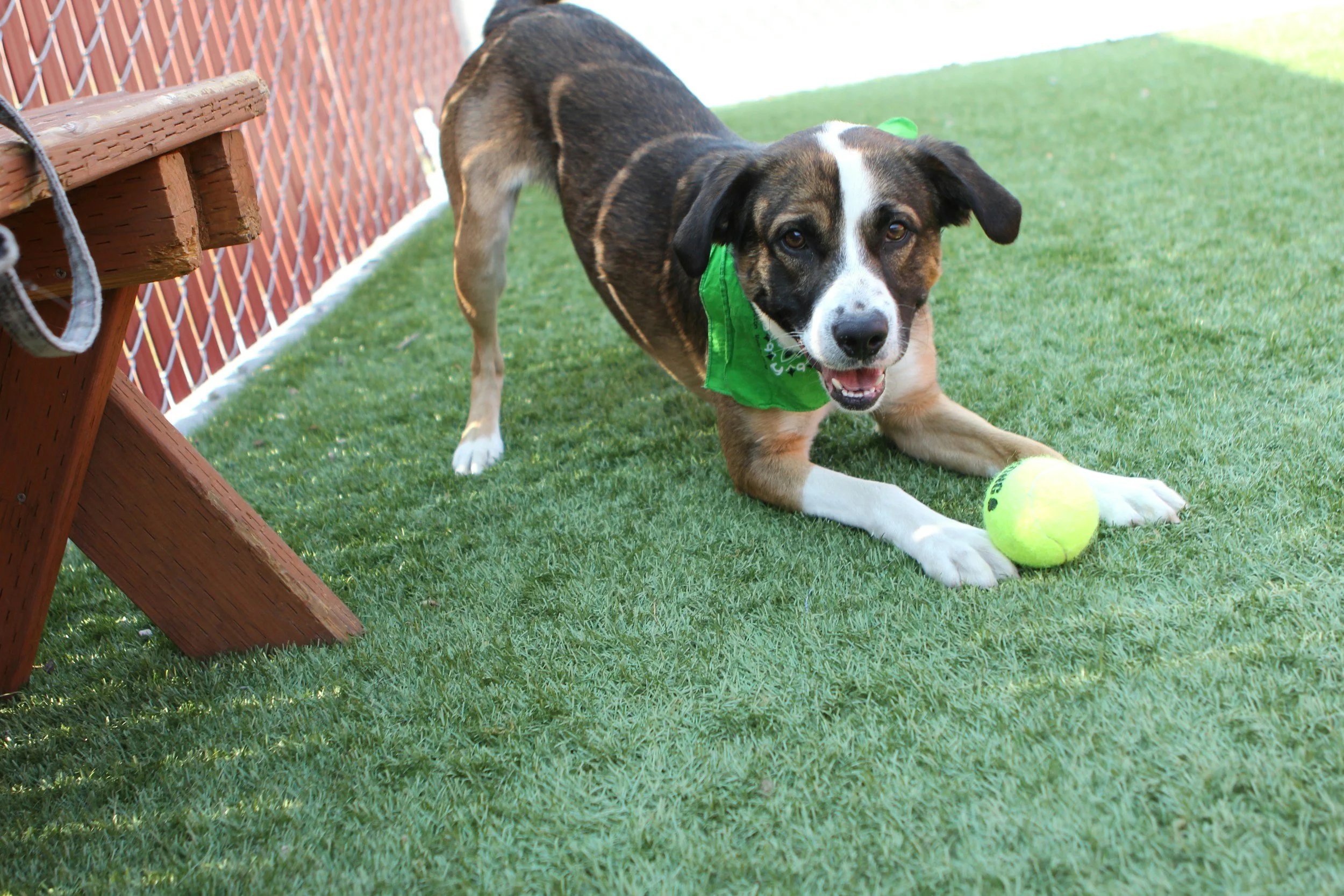
This dog is in a play bow position. Its front legs are splayed with the back end held high. The tail is also high and the mouth is held loosely open. This dog is inviting you to play and is welcoming your approach.
Dogs that are relaxed are capable of sitting, better yet laying down, and even better yet laying down with their legs outstretched to the side or behind them in a “sploot.” When standing, they will simply be in a neutral position with loose body language.
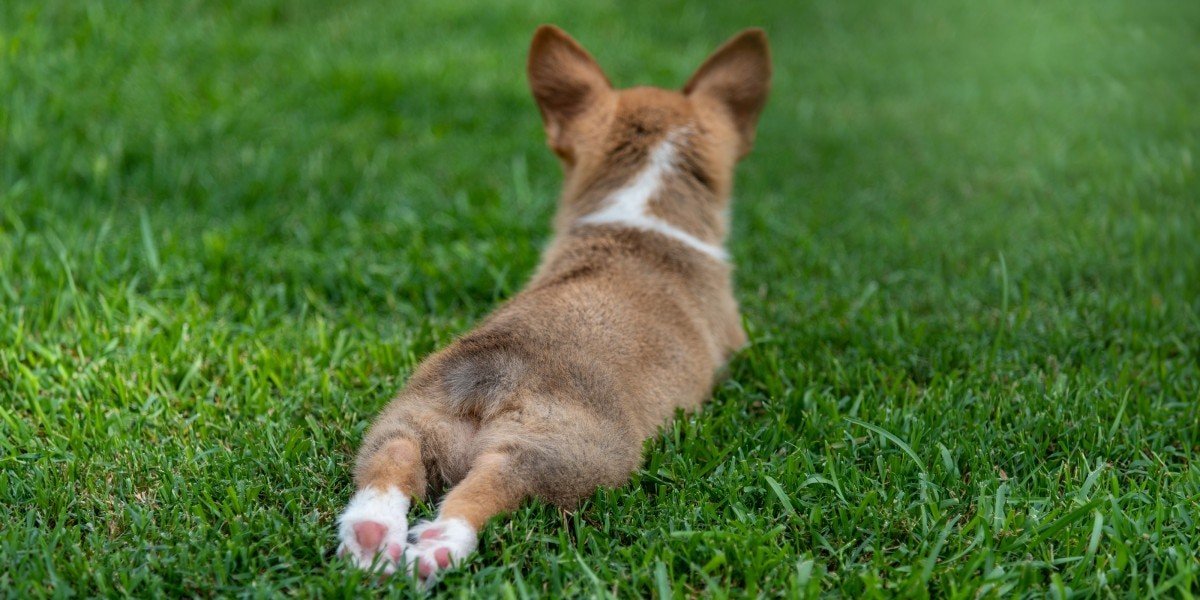
This dog is feeling so comfortable that it is outstretching its legs behind it in what we love to call a sploot.
Just like humans use body language to communicate, so do dogs. While some of what they do might mean different things than what they mean in people, we can learn and use their cues to ensure that we are interpreting their signals correctly. Understanding a dog’s posture can help prevent bites and broken trust. We can continue to build trust in our animals and strengthen our human-animal bonds by listening to what they are saying and respecting their boundaries.
These tips aren’t just for you—make sure that, if you have kids or any other people that interact with your dog, you help them understand these cues, too. If you notice your dog is uncomfortable with what someone is doing, speak up for your dog or remove them from the situation. You understand your dog’s body language while others may not. You are their voice in situations like that.
To learn more about dog body language, continue to follow this series. For more individualized help with dog training and behavioral management, please view my services here.